




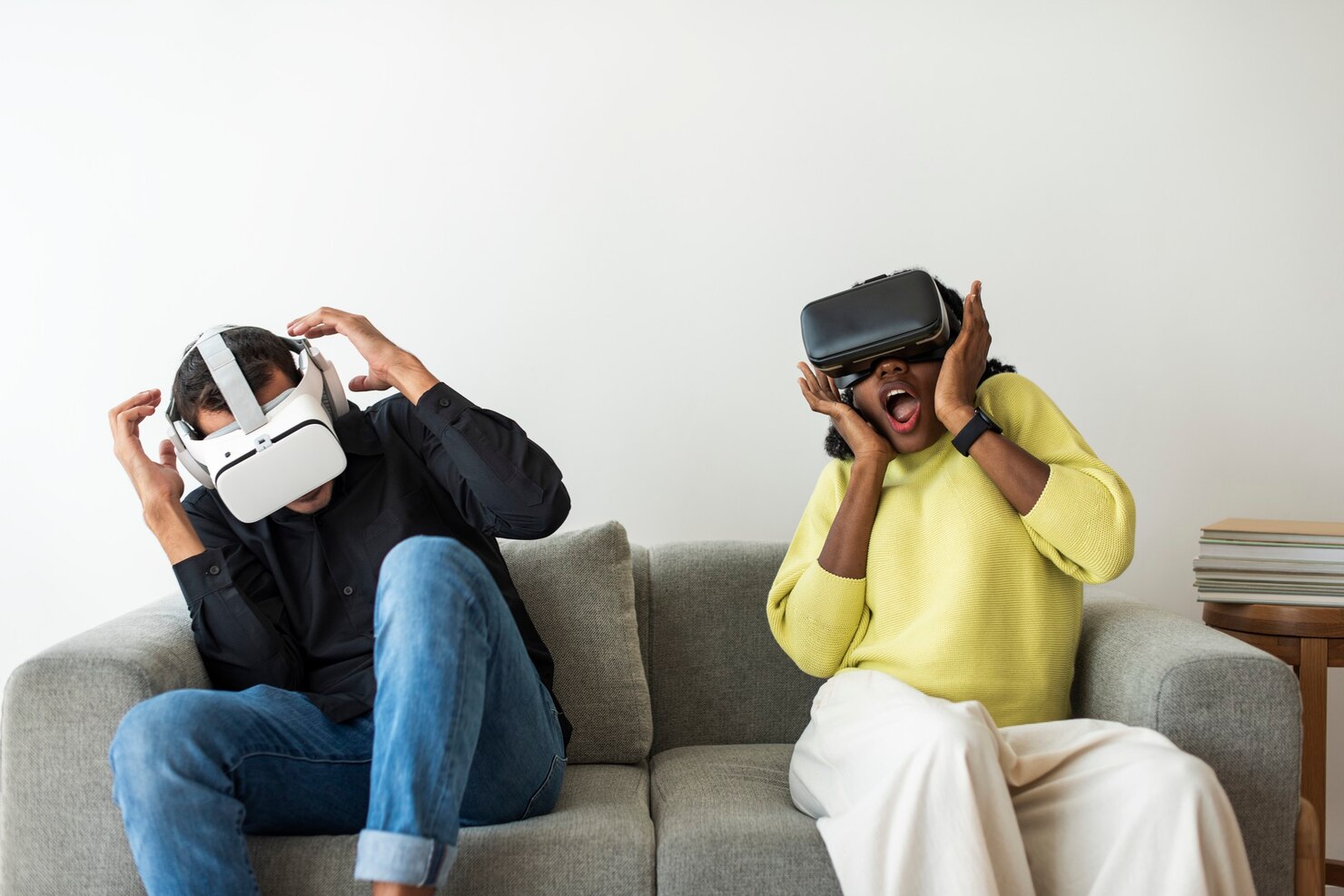

When most people hear AR (augmented reality) and VR (virtual reality), they picture gamers wearing bulky headsets, waving controllers in their living rooms. But here’s the twist: in the next five years, AR and VR won’t just belong to gamers—they’ll quietly slip into nearly every corner of our lives.
These technologies are evolving from “cool gadgets” to everyday tools. Think of them as the next smartphone moment: today they’re optional; tomorrow, they’ll be indispensable.
Here’s how AR and VR will reshape everyday life between now and 2030:
1. Education Becomes an Adventure
Forget boring textbooks. AR and VR will bring subjects to life.
A student learning history could walk through ancient Rome in VR, listening to virtual guides and experiencing the architecture firsthand.
In science, AR apps will let kids see molecules floating in the air or interact with the human body in 3D.
Impact: Learning will shift from memorization to experience. Classrooms become playgrounds for the mind.
2. Shopping Gets Personal
E-commerce will feel less like scrolling and more like being there.
Imagine “trying on” clothes virtually in your living room using AR, seeing exactly how they fit before buying.
VR malls will allow you to walk through digital stores, browse items, and interact with customer service avatars.
Impact: Returns go down, customer confidence goes up, and shopping becomes as immersive as Netflix.
3. Work Without Borders
Remote work isn’t going away—it’s leveling up.
Instead of staring at Zoom grids, teams will meet in virtual offices where their avatars sit around a digital table.
AR overlays will allow field workers (like engineers or doctors) to see instructions or guides projected onto their real-world tasks.
Impact: Work becomes collaborative, global, and more engaging. Physical office boundaries fade.
4. Healthcare Gets Immersive
AR and VR will save lives, not just entertain.
Surgeons already train with VR simulations before stepping into real operating rooms.
Patients may use VR for pain management, distraction during therapy, or exposure therapy for phobias.
AR tools will guide nurses or doctors with real-time visuals during treatment.
Impact: Faster training, safer surgeries, and better patient care.
5. Entertainment Evolves Into Experiences
Movies, concerts, and gaming will never be the same.
Instead of watching a concert on YouTube, you’ll attend it in VR, standing next to fans worldwide.
Sports events may allow you to “sit courtside” virtually while still being at home.
Gaming will blend with fitness, turning workouts into immersive adventures.
Impact: Entertainment will be more participatory, social, and lifelike.
The Challenges Ahead
Of course, it’s not all smooth sailing. For AR and VR to truly transform everyday life, several hurdles need to be addressed:
Accessibility: Devices must become cheaper and lighter.
Content: Developers need to build experiences beyond gaming.
Health: Long-term headset use raises questions about eye strain and balance.
Privacy: AR devices will collect a staggering amount of personal and spatial data.
Conclusion: The Blurred Line Between Real and Digital
In the next five years, AR and VR won’t just change how we play—they’ll change how we learn, shop, work, heal, and connect.
The real world and digital world are no longer separate. They’re fusing. And as AR and VR move mainstream, everyday life will feel richer, more interactive, and more immersive than ever before.
So, the real question isn’t “Will AR and VR change life?”
It’s “Are you ready to live in a blended reality?”








Reply to Comment